Coaching for teams that need to work differently, not just harder.
I lead Camino Capabilities and work with a trained co-coach on team engagements. Start small with an assessment or a single day, or go deep with a coaching engagement.

You've probably said one of these, or heard your team say it.
- The team can't take ownership of outcomes.
- We're behind on strategy implementation.
- We're pulled in five directions by different stakeholders.
- Internal politics keep us in a holding pattern.
- Our departments struggle to work together.
These may sound like performance problems. Underneath, your team may need stronger ways to communicate, make decisions, and work together. More planning won't fix that, and neither will another all-hands. The pattern has to be seen before it can change; the work then has to carry into your team's everyday decisions.
Each step builds on the one before, and you can start at any of the first three.
-
1
Team Pattern Assessment
The first step, and an easy one to take. A scoped look at your team's patterns: what's working, what's not, and where to start.
Assessment details -
2
Facilitation
A day's walk together. Sometimes a workshop or retreat is the right turning point for recognizing, and beginning, the right work.
Facilitation details -
3
Team Coaching Engagement
The long walk, where the real change happens. Embedded coaching over 6 or 12 months that turns insight into a new way of working.
Engagement details
Team Pattern Assessment
“You have to be where you are to get where you need to go.”
The assessment tells you, in plain language, what patterns are shaping your team's results and gives you a place to start.
Who it suits
Team leaders who sense something is off and want a clear, outside read before committing to more.
What happens
Your team completes a validated survey. At deeper levels, I add interviews and stakeholder input.
What you leave with
- A written read of your team's patterns, in plain language: what they're costing you, and what could change. Deeper levels make the picture richer, not the report longer.
- A development agenda, co-designed by the team in a live review session, where everyone makes sense of the findings together. This facilitated session is included at every depth.
Choose a depth
-
1. Team survey
$2,500Your team's own view, gathered through the High Value Creating Team Questionnaire, a validated tool for benchmarking team capability.
-
2. Survey + interviews
Custom quote based on team sizeThe stories behind the scores. We add structured interviews with team members to bring texture to the pattern.
-
3. Full-system read
Custom quote based on team sizeHow your team and its key stakeholders experience working together, not just how the team sees itself. Includes a stakeholder-mapping session with the team leader to choose the priority relationships before we survey.
Not sure which depth is right? Ask. That conversation is free.
Facilitation
Some situations need a day, not a year. I design and lead workshops and retreats that meet your team in its actual pattern, not a stock agenda.

Who it suits
Teams facing a specific moment: a strategy session that needs real alignment first, a charter for a new team, or a retreat that should build more muscle than a good memory.
What happens
We start with a free scoping conversation, then design the session together around what your team needs to move through.
What you leave with
Something your team couldn't produce alone: a decision, a shared plan, a charter, or a clearer way of working together.
Next step
If a deeper pattern shows up, a coaching engagement can carry the work forward.
About co-facilitationCo-facilitation is often the best practice. I can bring in a partner, or work with leaders from your own organization.
What makes me different as a facilitator?
Design Thinking instruction
I'm a LUMA-certified Design Thinking Instructor. I can teach your team human-centered, collaborative problem solving with a practical, flexible approach: an invaluable capability for any team that serves other people.
A lifelong learner of group dynamics
I'm a sincere nerd for helping a group meet its moment.
In my years of UX and service design consulting in the Accenture-Microsoft universe, I often introduced myself to clients as a retired camp counselor. It was my funny way of claiming some authority for the delivery team, and of explaining where my enthusiasm for collective success comes from. With that reputation, I became one of the most sought-after facilitators for internal and client workshops across the global firm.
It's also true. I spent 10+ summers leading retreats for kids and teens. Along the way I earned a bachelor's degree in Communication Studies, focused on rhetoric in social movements. My main curiosity: “How does anyone convince anyone else to do anything?”
Since then I've sought out every teacher who offered a way to develop a group's collective intelligence, including IDEO, the LUMA Institute and Renewal Associates, and communities like The Association of Value Webs and Priya Parker's Group Life.
It's a lifestyle, baby!
Team Coaching Engagement
Embedded coaching that meets your team inside the work you're already doing, not alongside it, over a 6- or 12-month arc.
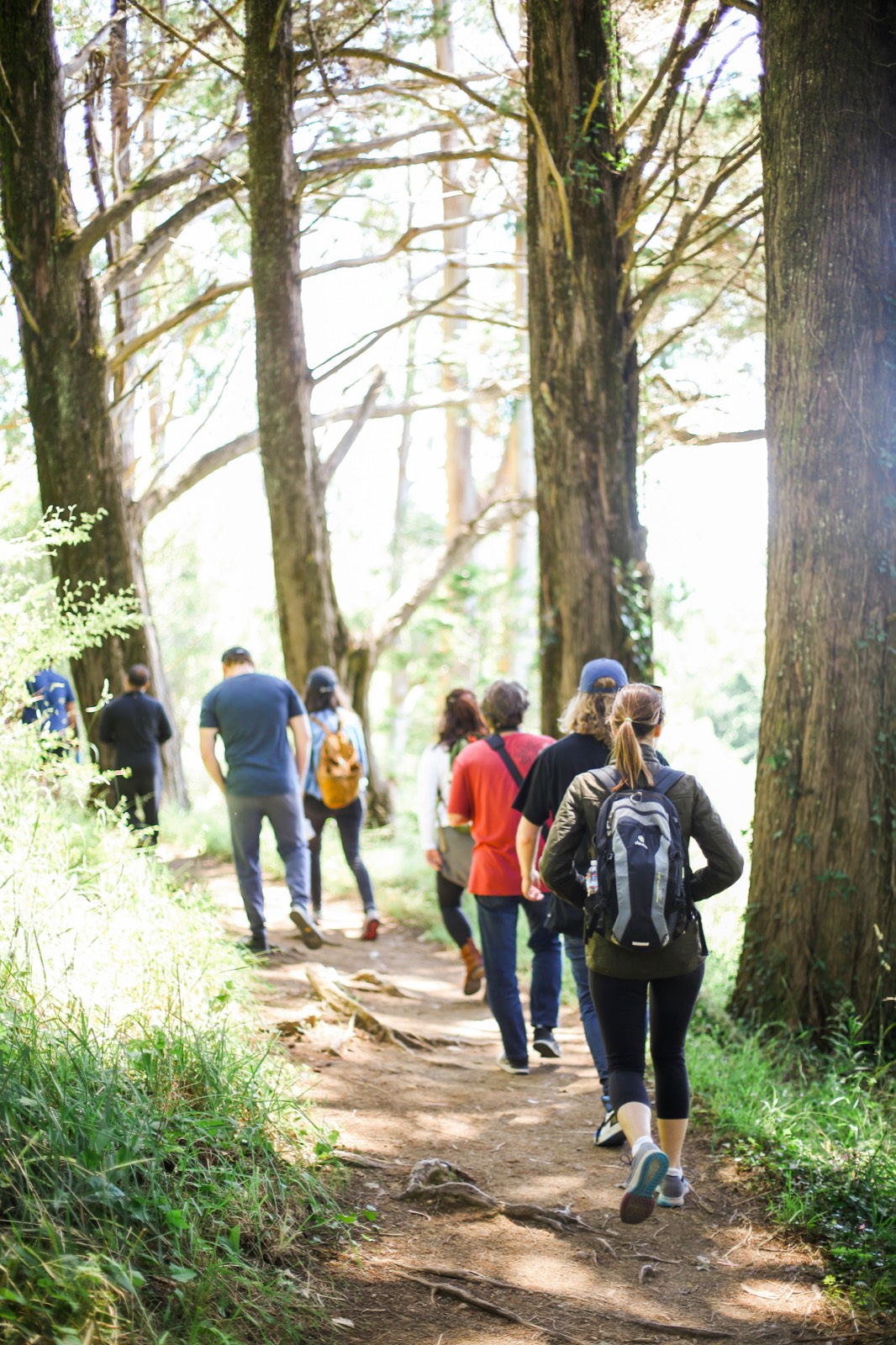
How the arc runs
Scope
We agree on the engagement and get clear on what we're working toward.
Inquiry
We listen to your team and to the people around it (hello, stakeholder ecosystem!) to understand where you actually are.
Co-design your agenda
From what we find, your team co-creates its own development agenda.
Coach in the real work
Coaching happens live, inside your real meetings and real decisions.
Review as you go
We build in review throughout, to check progress and to model the habit of reflection your team is building for itself. This is integrated learning.
Two lengths
FeesScoped in conversation, based on team size and engagement length.
Why two coachesEvery engagement is held by a pair of trained co-coaches, so we can see more of the team system at once. While one of us works with the group, the other tracks dynamics, power and unspoken patterns. Your team also sees a live working relationship between equals: the kind of collaboration we're coaching toward.
Learning Architecture & Capability Design
Learning architecture isn't picking training programs off a shelf. It's designing the conditions where people actually grow.
For teams we've coached, this is often the natural next question: now that we know how your system works, what capability should we build into it? From AI fluency to onboarding to culture programs, we design the connected set of learning your organization needs, from curriculum design to program implementation, so development sticks past the e-learning and past the workshop.
Our first conversation
Tell me where your team is and what's getting in the way. I'll bring an outside view of team patterns and a decade inside complex organizations. Together we'll work out whether an assessment, a session, or a longer engagement fits, and whether working together feels right.